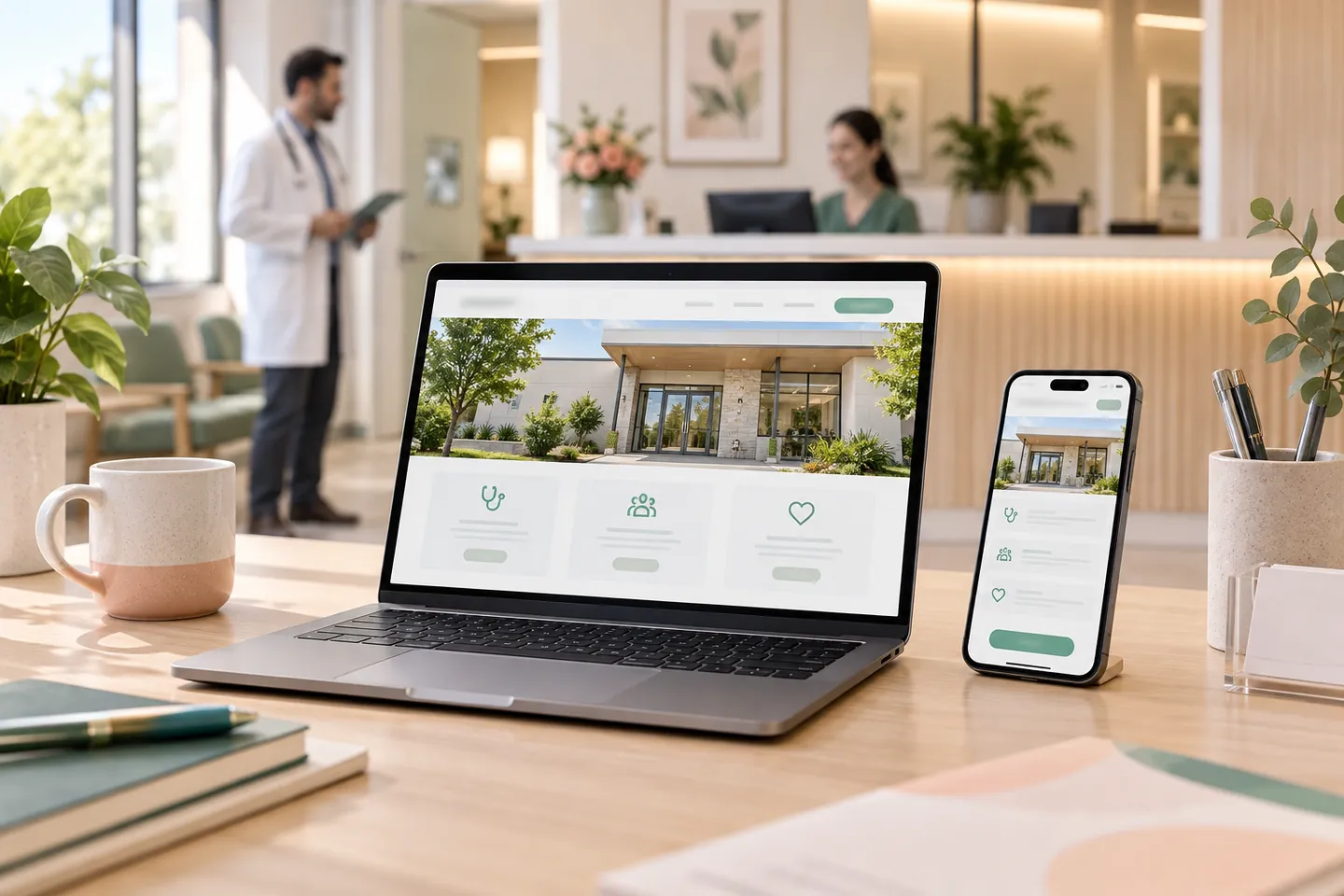
A website journey built around the visitor’s next step
Make your healthcare organization easier to understand online. Plan a public website around service availability, professional information and the correct enquiry destination.
Clarify specialties and locations before designing screens
A healthcare group may have overlapping services, different branch facilities and multiple contact teams. We inventory those relationships before choosing the public navigation structure. Visitors should be able to identify where a service is offered and how to make the appropriate enquiry. The content brief names the verified organizational and practitioner information required, with professional reviewers responsible for medical statements and service limitations before publication.
A visitor may struggle to find the right service or understand what happens after an enquiry.
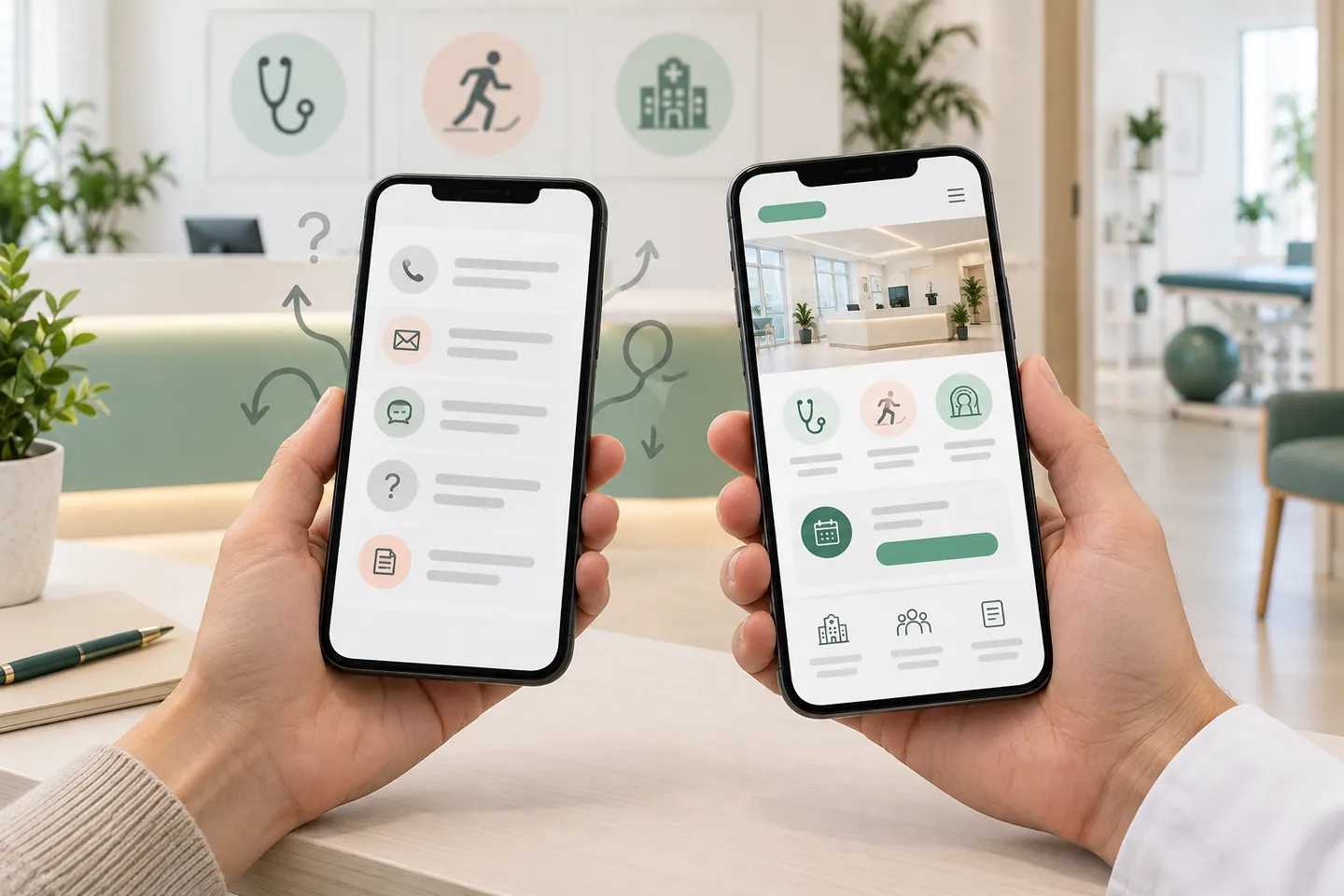
Mobile layouts can make contact details, forms or booking links difficult to use.
Unclear ownership of content and integrations can delay delivery. For this healthcare organisation, the brief must account for branch capacity and specialty-specific availability.
A launch can leave old links or useful pages without a considered destination.
Existing URLs, search entry points and incoming links are reviewed before structural changes. The migration map identifies retained pages, approved redirects and genuinely retired material rather than sending every old page to the homepage. Acceptance checks cover rendered content, canonical tags, sitemap inclusion, small-screen usability and enquiry destinations. Handover documents content ownership, hosting responsibilities and system dependencies so everyday updates remain manageable after the project is released.
Readable content, accessible navigation and usable mobile forms matter alongside the visual presentation. We plan service pages, branch details and contact paths around the decisions visitors need to make. Clear labels should distinguish general enquiries from appointment requests and existing-patient support where applicable. The project should avoid collecting unnecessary clinical information through a public marketing form or suggesting that an online enquiry establishes suitability for a service.
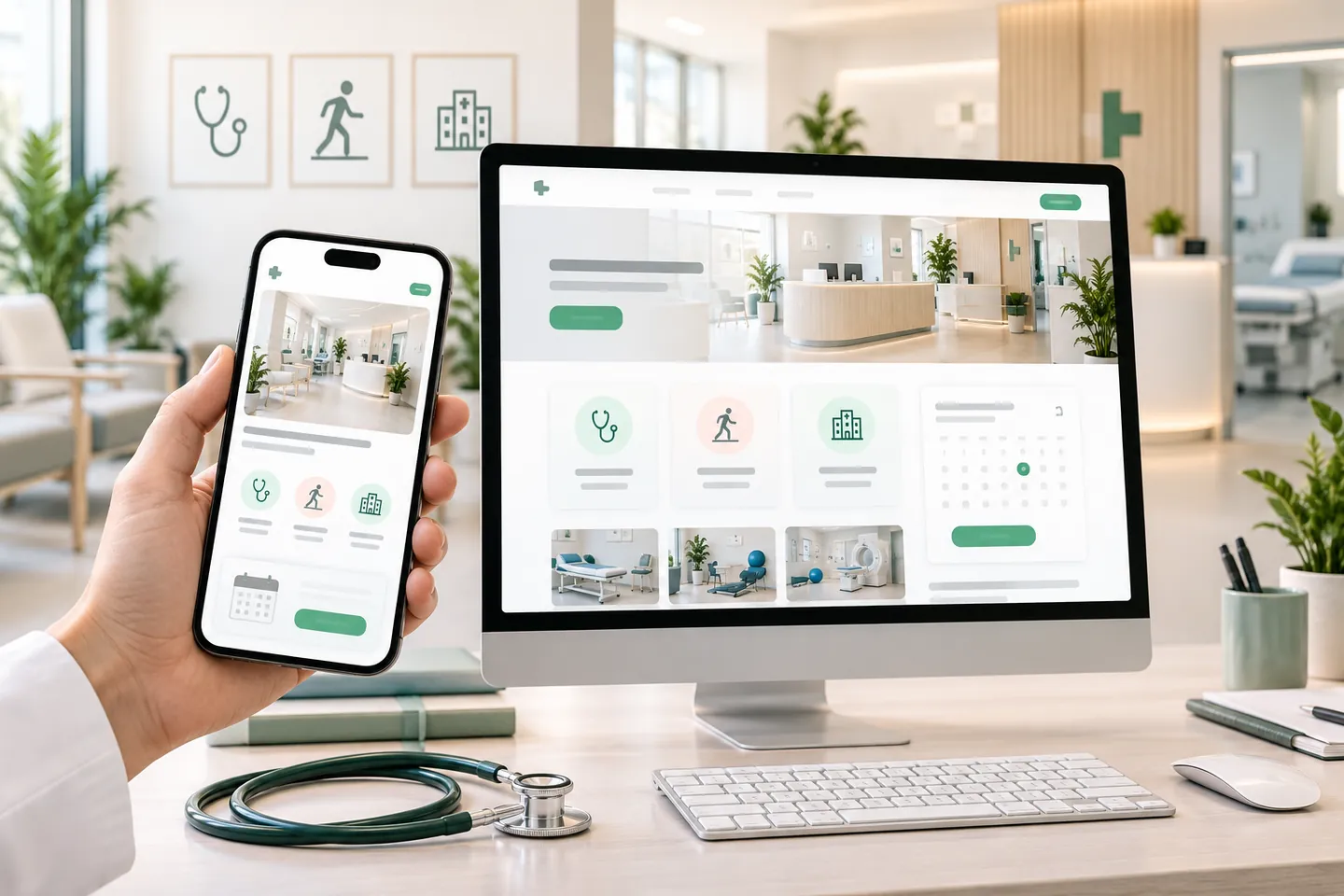
Map the services, audiences and next steps into a navigable page structure before deciding how the visual interface should work. For healthcare providers, this includes specialties, practice locations and private-care appointment enquiries.
Responsive enquiry journeys
Review content, navigation and enquiry controls on small and large screens, including keyboard use and the booking handoff. For healthcare providers, this includes specialties, practice locations and private-care appointment enquiries.
A scoped delivery and handover
Agree the required integrations, content responsibilities, launch checks and ongoing ownership as part of the project scope. For healthcare providers, this includes specialties, practice locations and private-care appointment enquiries.
Give each service a clear place in the website
Scope integrations with the existing systems
Booking providers, patient portals and organizational systems need an explicit boundary with the public website. We verify supported links, embeds or documented interfaces before promising integration. A marketing website project does not automatically include EHR development, clinical records management or a patient portal rebuild. Data flow, ownership and acceptance requirements belong in the brief, with appropriate provider review and no unsupported compliance certification claimed by the agency.
A practical view of website planning and acceptance
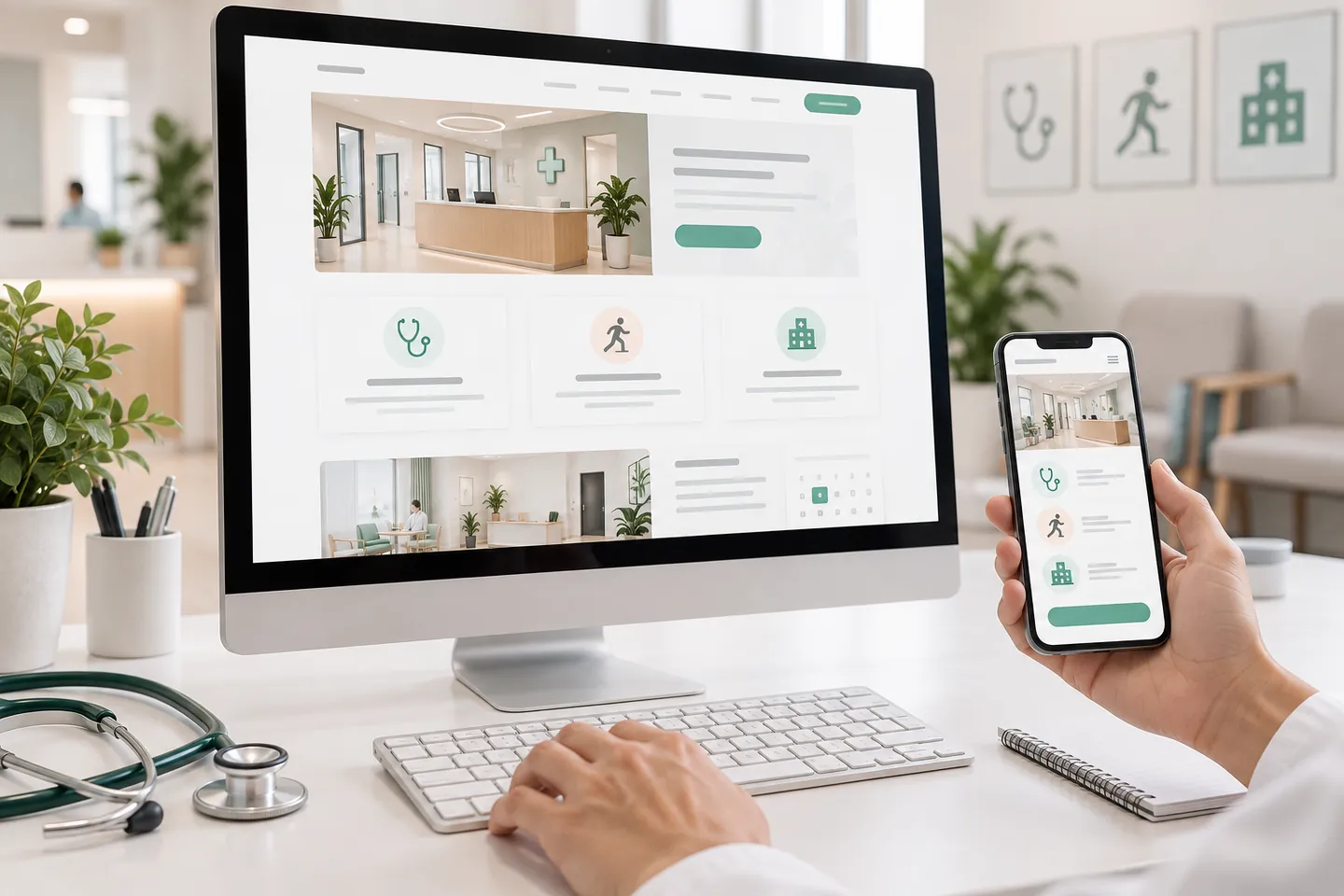
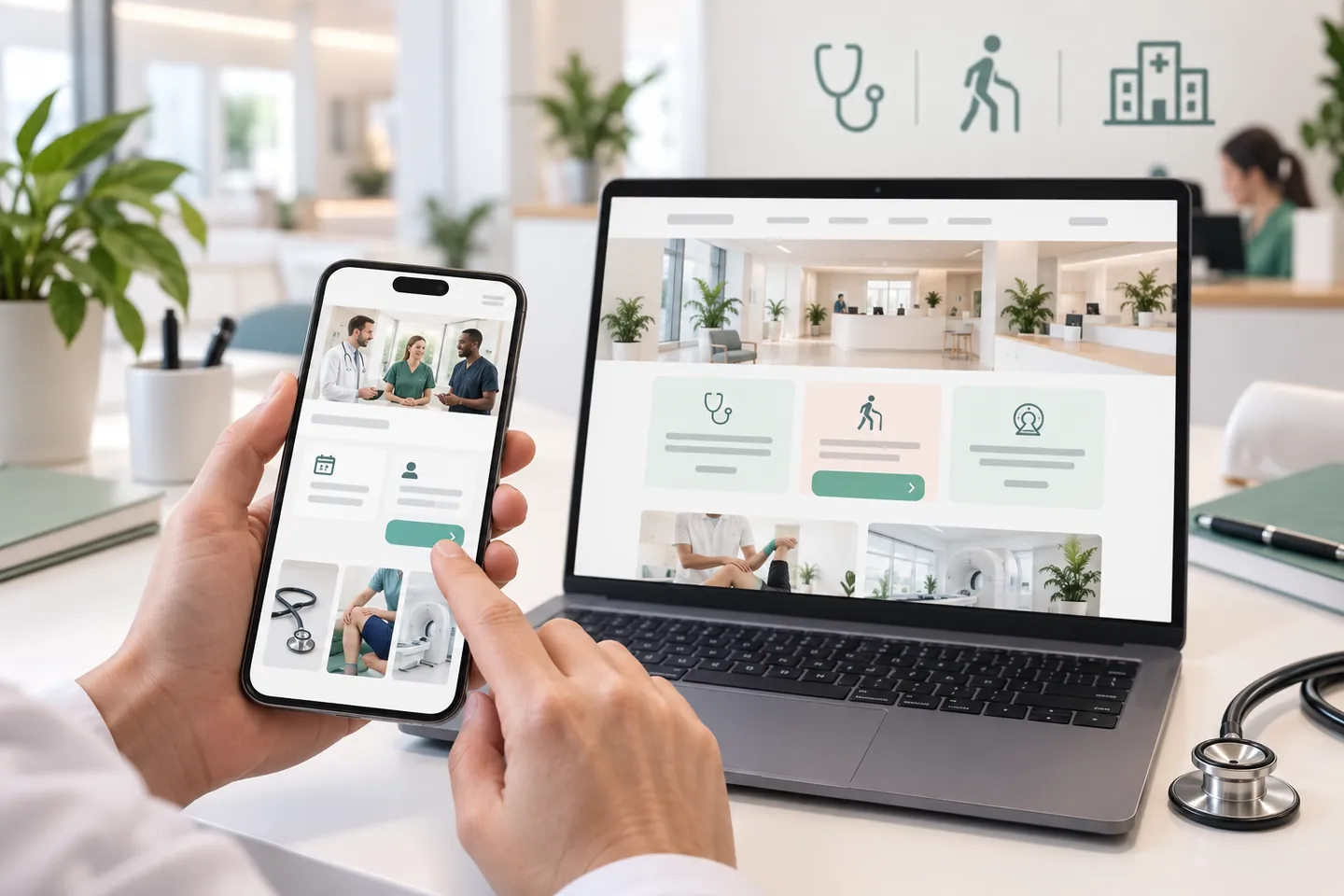
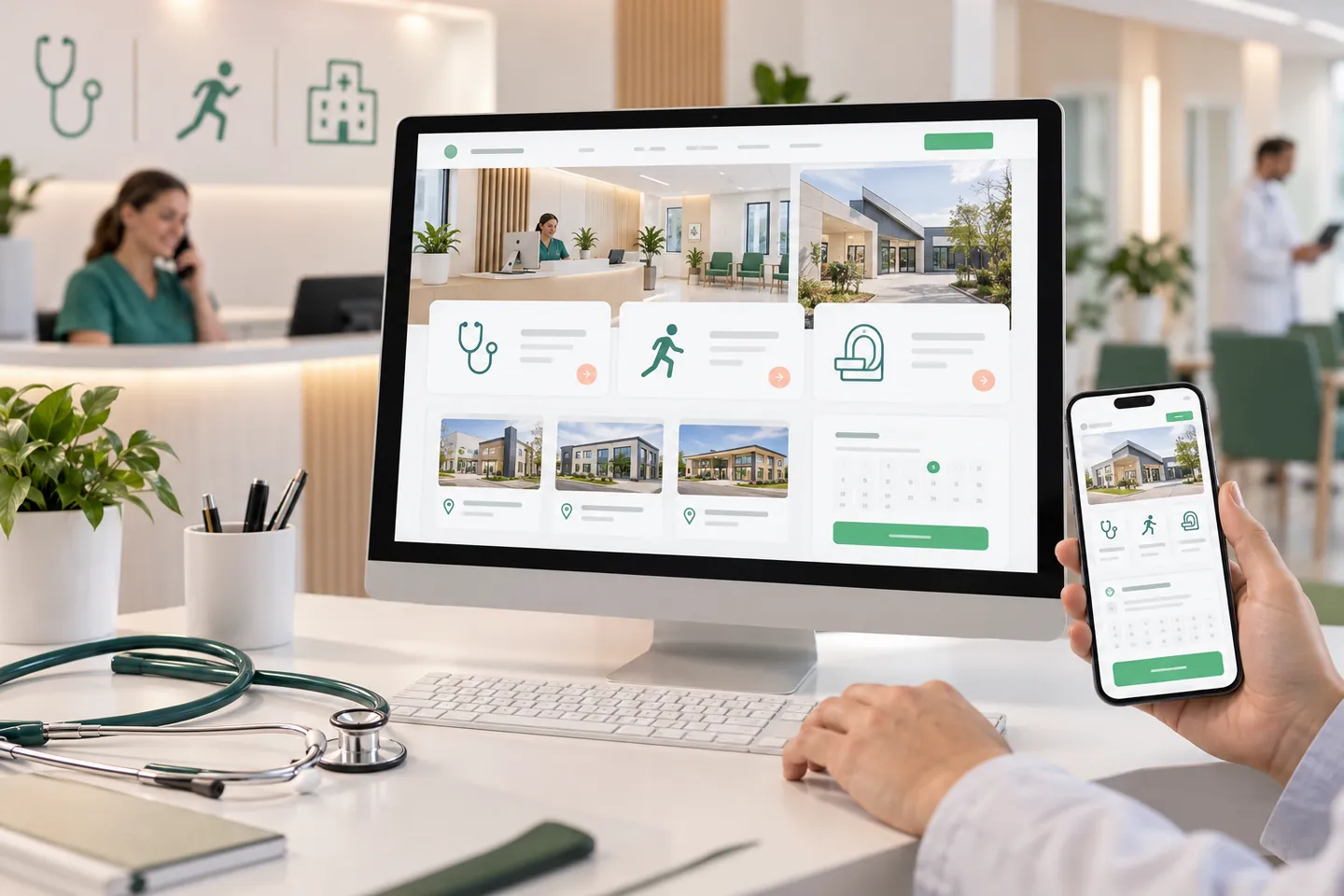
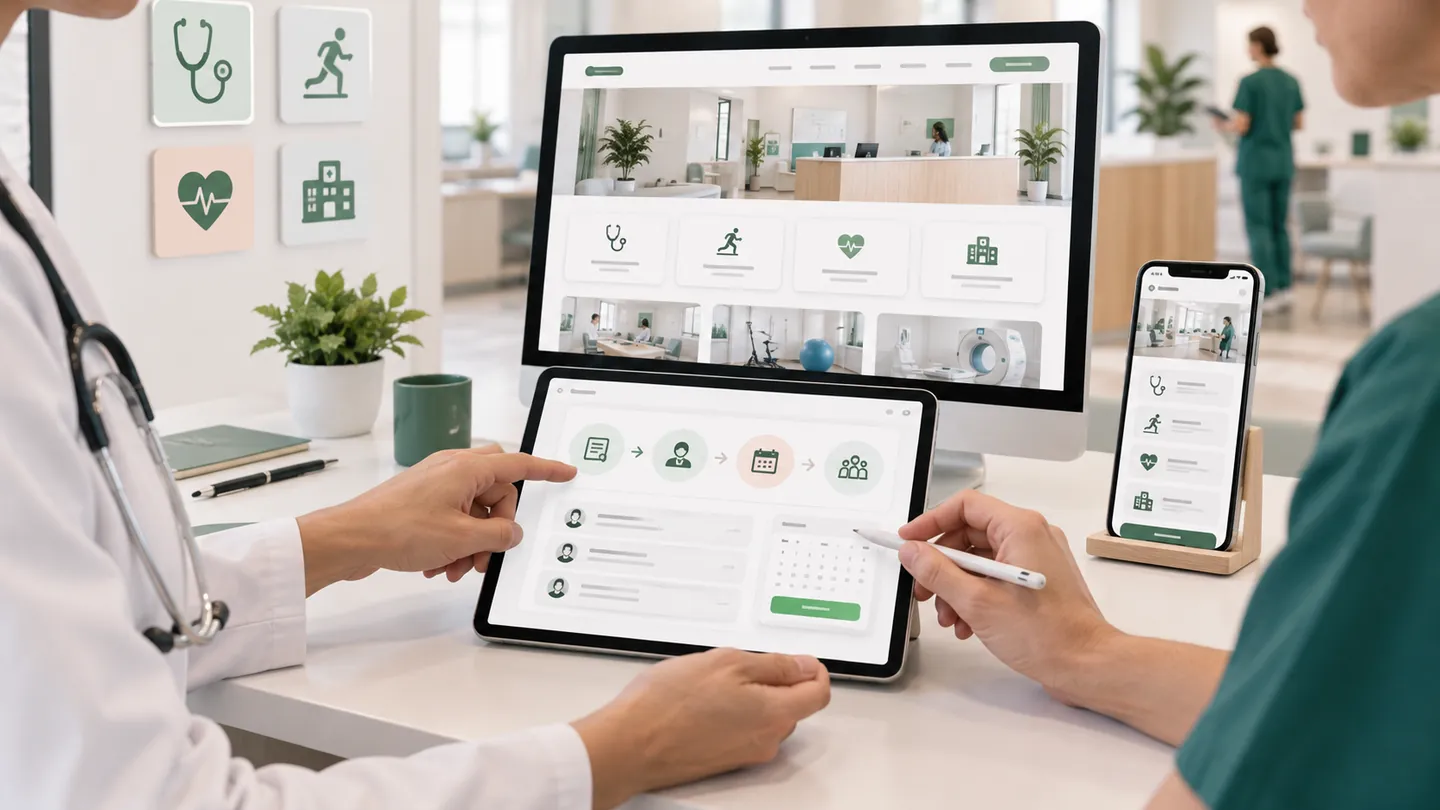
These illustrations show planning and review concepts, not client results or measured campaign outcomes. For this healthcare organisation, the review connects website planning with branch capacity and specialty-specific availability and a clear handoff to the appropriate practice or specialty team.
Agree the page structure, functionality and acceptance criteria before building. Review the website with the team that will maintain its information and handle enquiries.
No. The standard scope is the public marketing website and agreed connections to verified systems. Clinical software projects require separately demonstrated capabilities and requirements.
Can different branches manage their information?
The discovery brief can define editorial responsibilities and approval permissions by branch. The required CMS workflow is agreed before development.
Discuss a healthcare website project
Tell us about your business and the service you are considering. We will contact you to clarify the scope, priorities and next steps.